Showing posts with label beach. Show all posts

Tuesday, 26 July 2016

Cromer Official Guide, 1965 (Part 2)


I’ve been reading a Cromer guidebook from 1965. In my last blog post I shared some details from the guide about how the holidaymaker could have reached this Norfolk seaside town. Today I’m going to tell you about some of Cromer’s visitor attractions.


Tourist Information

On arrival in the town, one of the first ports of call for holidaymakers might have been the information bureau which stood on the East Gangway near The Rocket House Gardens. However, if the holidaymaker had wanted to ask any questions about the resort before booking their holiday, the staff of this Information Bureau would have been ‘glad to answer any enquiry by letter or personal call and give every assistance and help toward making your stay in Cromer an enjoyable one’ (page 1). How reassuring!


If you are familiar with the town you will know that Cromer now has a modern purpose-built tourist information centre on Loudon Road. From here you can find out about public transport services, and places to visit around the county. You can also buy the all-important postcard to send home.


The Picture From the Beach

‘Picture a long, broad, sandy beach – never dirty and never overcrowded – where the retreating tide exposes, among the wave-wrinkled sands and the shallow paddling pools of the ‘lows’, pebble ridges where children delight to gather winkles and hunt for baby crabs and coloured seaweed’ (page 3).


Regular Cromer visitors will recognise the surname of Davies as part of Cromer's crab fishing industry. In 1965 the Davies family not only supplied tourists with crustaceans but also hired out deck chairs and beach huts. As this advert above states…

If visiting in 1965, you could have hired your Davies deckchair and spent a day sitting on the sands. Sadly, in Summer 2016, Davies' crab shop on the Gangway is closed and up for sale.


Attractions

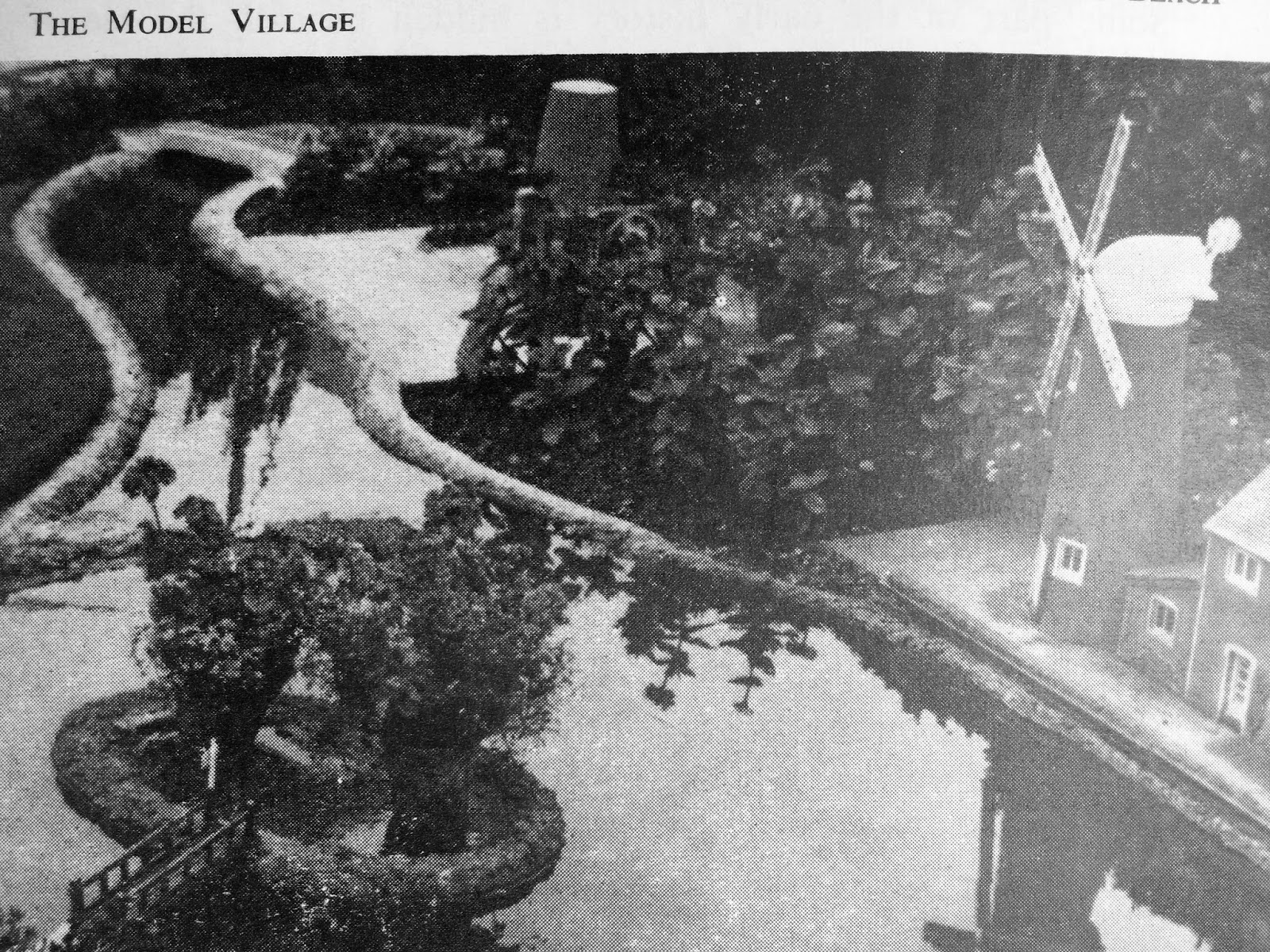
As well as the lovely beaches, there was a model village situated in North Lodge Park in 1965 where visitors could walk 'like Gulliver in Lilliput, among scale models of some of the famous buildings of Norfolk' (page 16).

The nearest model village to Cromer is now Merrivale, just down the coast in Great Yarmouth.


Cromer still has a zoo, but the Amazona is situated further out of town than the one in the 1965 guide. This says that the zoo was a recent addition to the town's attractions in the mid '60s.

'... Owned by a former lion-tamer of Bertram Mills's Circus, Alex Kerr. Mrs. Kerr is a daughter of Coco, and that famous and well-beloved clown is often to be seen nowadays about the streets of Cromer – a benevolent and elderly gentleman, not always recognised without his false nose, red wig and enormous boots' (page 12).

The site of the original Cromer Zoo can be seen to the left of this map


For one shilling and sixpence, the holidaymaker could have visited Birdland.


Golf, tennis, bowls, walking, riding and angling, were the pursuits advertised for the more sporting visitor. The tennis courts on Norwich Road were the ‘finest’ in East Anglia (advertisement, page 106). Other places of interest were the boating lake (still there in 2016), and the Regal Cinema (now known as Movieplex).


Olympia was 'the teenagers' rendezvous' where wrestling, skating, bingo, and jiving provided 'entertainment at its best'. Budgens supermarket and its adjoining car park now stand in its place. Where do the teenagers go jiving now I wonder?....


Budgen's car park in the centre of the photo was the site of the
Olympia Rollerdrome

In the next installment, I will let you know all about the hotels, guest houses and other places where you could have stayed just over 50 years ago.


 ************

All quotes and selected images from Cromer and District Official Guide, 1965, published by the Cromer Advertising Association, Urban District Council.


Wednesday, 20 July 2016

Cromer Official Guide, 1965 (Part 1)


You can learn a lot about a seaside resort's history from old holiday guides. You can also learn a lot about the tourist trade of the time.

This Cromer and District Official Guide from 1965 has a potted history of the town including information on lifeboat Coxwain Henry Blogg. However, the advertisements for guesthouses and attractions reveal small details about how much the resort has altered since the mid 1960s, and also how little it has changed. In this blog post I tell you how to get there.

 
Cromer's East Beach, long before the Rocket House Cafe
and Henry Blogg Museum were built


Getting There

The guide quotes from a local hotel proprietor who points out how the trade in 1965 changed across the year - from the elderly visitors who holidayed off-season, to married couples with young children in May, families with school-aged children in July, and young couples with prams until September. After the latter had left, the elderly returned once again. I imagine it is much the same today, with the peak tourist season being during the school holidays.

The guide also informs us that motor cars and holidays with pay had brought Cromer's delights 'within range of a far larger number of people than could reach them sixty years [previously]' (page 17).

A list of approximate distances between Cromer and cities around the United Kingdom shows that the publishers were hoping to attract motorists from as far away as Bristol (226 miles) and as near as Norwich (25 miles). It boasts that although ‘the quaint old streets in the centre are very narrow, the town has parks for 5,000 cars’ (page 16).

In an age when a large proportion of people relied on public transport rather than owned a car, the advertisements for coach services give a good idea about the hometowns of Cromer's customers.


Premier Travel supplied express coaches from Bedford, St. Neots and Huntingon Chatteris. Sheffield United Tours brought holidaymakers from Worksop, Sheffield and Rotherham. Trent Motor Traction Company carried people from Nottingham, Grantham, Derby, Loughborough and Mansfield.

The guide also gives an insight into rail links to this North Norfolk resort, with 'good train services of British Railways [connecting] Cromer with the rest of the country' including express trains to London and also services from Nottingham, Sheffield, Manchester, Leeds, Bradford, Leicester and Birmingham. The list gives a good record of some of the main towns where Cromer's holidaymakers came from (page 35).

Incidentally the same page informs the holidaymaker about the location of Cromer’s water supply – a deep well at the nearby village of Metton. How many holiday guides include this type of information in 2016?!


In further posts I will reveal more about Cromer’s attractions and tell you where you could have stayed in 1965.

Rocket House Gardens, Brunswick Terrace and the Gangway behind. This view has changed very little, although the houses to the left have been stripped of their ivy.


All quotes and selected images from Cromer and District Official Guide, 1965, published by the Cromer Advertising Association, Urban District Council.

Wednesday, 15 February 2012

SHELLS! Eccentric Seaside Art

Shell House postcard

I lived in Bournemouth for a while in the early 1990s. On several occasions I went to visit the Shell House in Southbourne. This folly was an incredible collection  of sea shells collected from all over the world by one man, George Howard, and managed to be both amusing and moving in equal measure.

Shell House postcards


Not long before I left Bournemouth I filmed the Shell House; these are some stills from my cine film:


You can view a clip of the movie here:


I was sad to hear years later that the attraction had been demolished, but I'm pleased that I was able to capture it on film and that I can share it today.

You can read more about the Shell House here:

THE SHELL HOUSE 

*******

More recently, I came across the Peter Coke Shell Gallery in Sheringham, North Norfolk. Just like the Shell House, this gallery houses the work of one man, the late actor Peter Coke who was enamoured with the art of 'sailor's valentines' but took it to another level with his miniature gardens, temples and flower posies, all constructed out of shells and coral. 


The gallery is open in the summer months. It is free to enter but there are postcards and shells for sale, or you can make a donation towards its upkeep.


Read more about the Peter Coke Gallery here:

PETER COKE SHELL GALLERY 


(Postcards of the Shell House on this Blog by Dennis, Salmon and J. Hammersley, Boscombe).