

I’ve been reading a Cromer guidebook
from 1965. In my last blog post I shared some details from the guide about how the
holidaymaker could have reached this Norfolk seaside town. Today I’m going to
tell you about some of Cromer’s visitor attractions.
Tourist Information
On arrival in the town, one of the
first ports of call for holidaymakers might have been the information bureau
which stood on the East Gangway near The Rocket House Gardens. However, if the holidaymaker had wanted to ask any questions about the resort before booking their holiday, the staff of
this Information Bureau would have been ‘glad to answer any enquiry by letter
or personal call and give every assistance and help toward making your stay in
Cromer an enjoyable one’ (page 1). How
reassuring!

If you are familiar with the town you
will know that Cromer now has a modern purpose-built tourist information centre
on Loudon Road. From here you can find out about public transport services, and
places to visit around the county. You can also buy the all-important postcard
to send home.

The Picture From the Beach
‘Picture a long, broad, sandy beach –
never dirty and never overcrowded – where the retreating tide exposes, among
the wave-wrinkled sands and the shallow paddling pools of the ‘lows’, pebble
ridges where children delight to gather winkles and hunt for baby crabs and
coloured seaweed’ (page 3).

Regular Cromer visitors will recognise
the surname of Davies as part of Cromer's crab fishing industry. In 1965 the Davies family not
only supplied tourists with crustaceans but also hired out deck chairs and
beach huts. As this advert above states…
If visiting in 1965, you could have
hired your Davies deckchair and spent a day sitting on the sands. Sadly, in Summer 2016, Davies' crab shop on the Gangway is closed and up for sale.

Attractions
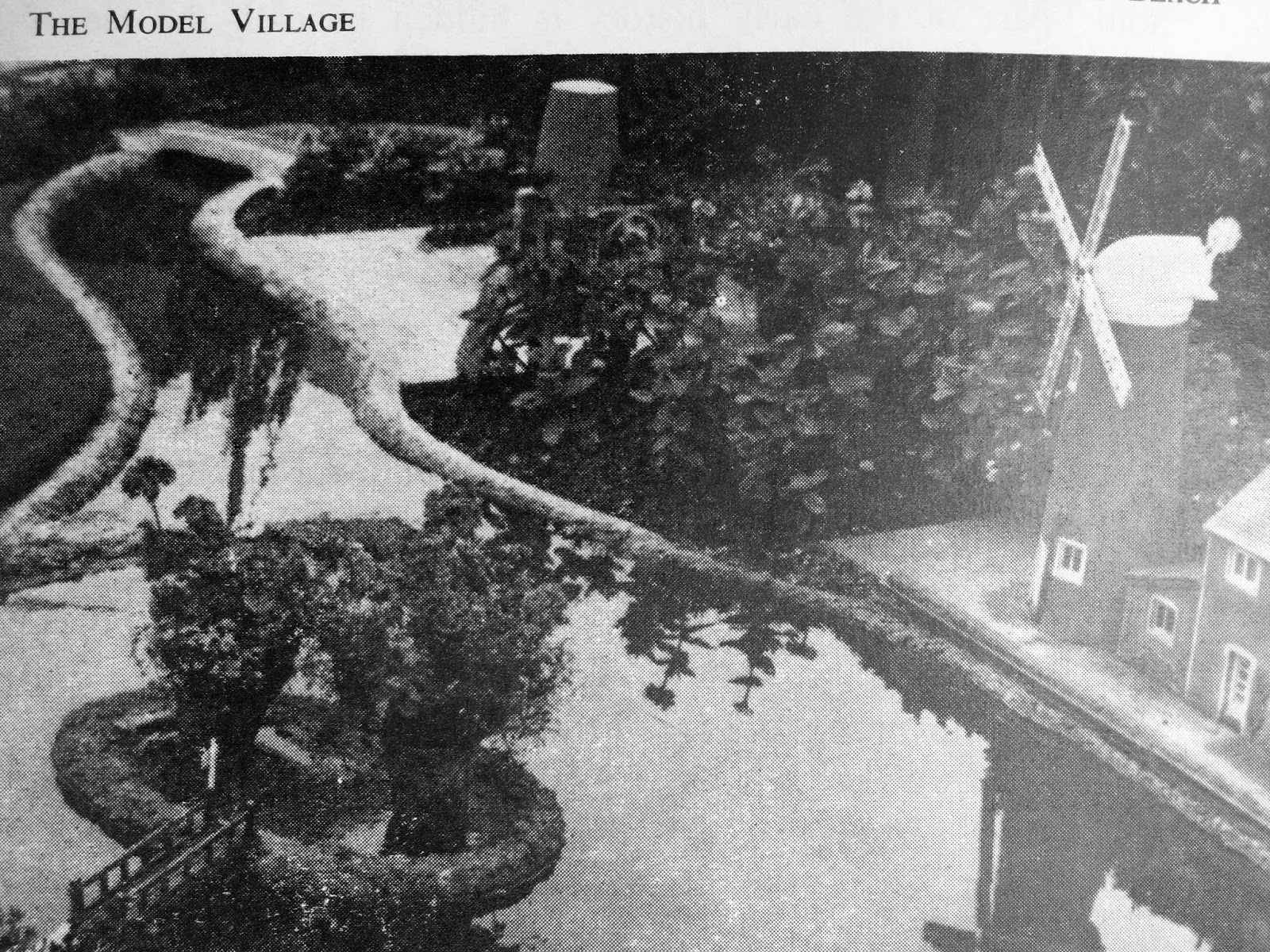
As well as the lovely beaches, there
was a model village situated in North Lodge Park in 1965 where visitors could
walk 'like Gulliver in Lilliput, among scale models of some of the famous
buildings of Norfolk' (page 16).
The nearest model village to Cromer is now Merrivale, just down the coast in
Great Yarmouth.
Cromer still has a zoo, but the
Amazona is situated further out of town than the one in the 1965 guide. This
says that the zoo was a recent addition to the town's attractions in the mid
'60s.
'... Owned by a former lion-tamer of
Bertram Mills's Circus, Alex Kerr. Mrs. Kerr is a daughter of Coco, and that
famous and well-beloved clown is often to be seen nowadays about the streets of
Cromer – a benevolent and elderly gentleman, not always recognised without his
false nose, red wig and enormous boots' (page 12).
 |
| The site of the original Cromer Zoo can be seen to the left of this map |

For one shilling and sixpence, the holidaymaker could have visited Birdland.


Golf, tennis, bowls, walking, riding
and angling, were the pursuits advertised for the more sporting visitor. The
tennis courts on Norwich Road were the ‘finest’ in East Anglia (advertisement,
page 106). Other places of interest were the boating lake (still there in 2016), and the Regal Cinema (now known as Movieplex).


Olympia was 'the teenagers' rendezvous' where wrestling, skating, bingo, and jiving provided 'entertainment
at its best'. Budgens supermarket and its adjoining car park now stand in its
place. Where do the teenagers go jiving now I wonder?....

 |
| Budgen's car park in the centre of the photo was the site of the Olympia Rollerdrome |
In the next installment, I will let
you know all about the hotels, guest houses and other places where you could
have stayed just over 50 years ago.
All quotes and selected images from Cromer and District Official Guide,
1965, published by the Cromer Advertising Association, Urban District Council.


