Showing posts with label cinema. Show all posts

Tuesday, 26 July 2016

Cromer Official Guide, 1965 (Part 2)


I’ve been reading a Cromer guidebook from 1965. In my last blog post I shared some details from the guide about how the holidaymaker could have reached this Norfolk seaside town. Today I’m going to tell you about some of Cromer’s visitor attractions.


Tourist Information

On arrival in the town, one of the first ports of call for holidaymakers might have been the information bureau which stood on the East Gangway near The Rocket House Gardens. However, if the holidaymaker had wanted to ask any questions about the resort before booking their holiday, the staff of this Information Bureau would have been ‘glad to answer any enquiry by letter or personal call and give every assistance and help toward making your stay in Cromer an enjoyable one’ (page 1). How reassuring!


If you are familiar with the town you will know that Cromer now has a modern purpose-built tourist information centre on Loudon Road. From here you can find out about public transport services, and places to visit around the county. You can also buy the all-important postcard to send home.


The Picture From the Beach

‘Picture a long, broad, sandy beach – never dirty and never overcrowded – where the retreating tide exposes, among the wave-wrinkled sands and the shallow paddling pools of the ‘lows’, pebble ridges where children delight to gather winkles and hunt for baby crabs and coloured seaweed’ (page 3).


Regular Cromer visitors will recognise the surname of Davies as part of Cromer's crab fishing industry. In 1965 the Davies family not only supplied tourists with crustaceans but also hired out deck chairs and beach huts. As this advert above states…

If visiting in 1965, you could have hired your Davies deckchair and spent a day sitting on the sands. Sadly, in Summer 2016, Davies' crab shop on the Gangway is closed and up for sale.


Attractions

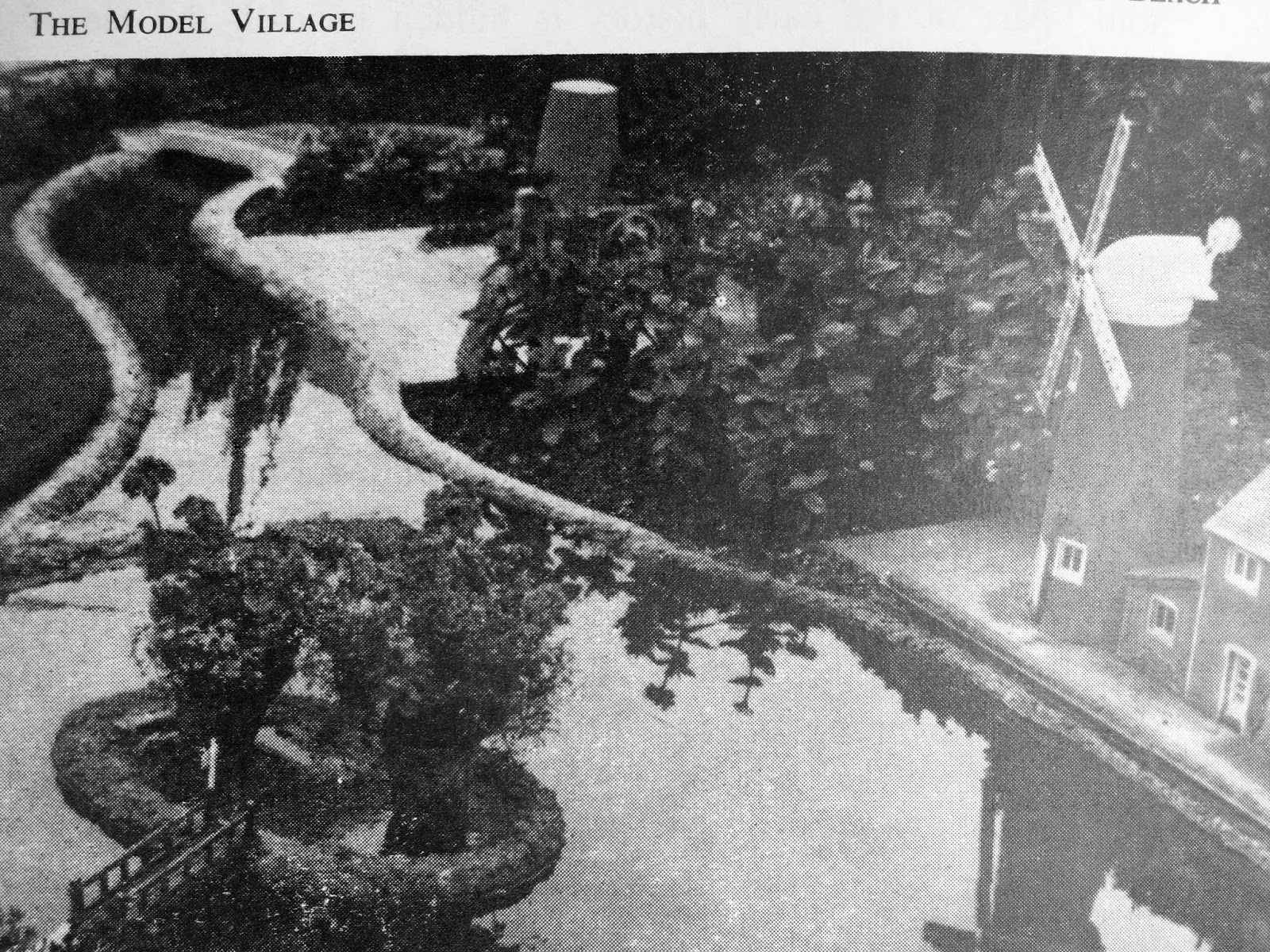
As well as the lovely beaches, there was a model village situated in North Lodge Park in 1965 where visitors could walk 'like Gulliver in Lilliput, among scale models of some of the famous buildings of Norfolk' (page 16).

The nearest model village to Cromer is now Merrivale, just down the coast in Great Yarmouth.


Cromer still has a zoo, but the Amazona is situated further out of town than the one in the 1965 guide. This says that the zoo was a recent addition to the town's attractions in the mid '60s.

'... Owned by a former lion-tamer of Bertram Mills's Circus, Alex Kerr. Mrs. Kerr is a daughter of Coco, and that famous and well-beloved clown is often to be seen nowadays about the streets of Cromer – a benevolent and elderly gentleman, not always recognised without his false nose, red wig and enormous boots' (page 12).

The site of the original Cromer Zoo can be seen to the left of this map


For one shilling and sixpence, the holidaymaker could have visited Birdland.


Golf, tennis, bowls, walking, riding and angling, were the pursuits advertised for the more sporting visitor. The tennis courts on Norwich Road were the ‘finest’ in East Anglia (advertisement, page 106). Other places of interest were the boating lake (still there in 2016), and the Regal Cinema (now known as Movieplex).


Olympia was 'the teenagers' rendezvous' where wrestling, skating, bingo, and jiving provided 'entertainment at its best'. Budgens supermarket and its adjoining car park now stand in its place. Where do the teenagers go jiving now I wonder?....


Budgen's car park in the centre of the photo was the site of the
Olympia Rollerdrome

In the next installment, I will let you know all about the hotels, guest houses and other places where you could have stayed just over 50 years ago.


 ************

All quotes and selected images from Cromer and District Official Guide, 1965, published by the Cromer Advertising Association, Urban District Council.


Sunday, 19 June 2016

The Rex Cinema, Coalville: A Little Art Deco Palace


This is the Coalville Rex cinema. The last film it ever screened was 'Champions' starring John Hurt in 1984. The Rex was a two-screen cinema, with Screen 1 being situated at the top of a long staircase that took audiences to a large upper circle. Screen 2 had been built at a later date in the stalls area of the main auditorium.

For many years since the cinema's closure it has been used as a Dunelm Mill shop selling homeware and soft furnishings. Dunelm have been sympathetic to the interior of the cinema and very few alterations have been made.

If you visit the shop and concentrate on the architecture rather than the shelves of towels and bed linen you can find many tell tale signs about the Rex's former Art Deco splendour.

Entrance steps and sign for the buffet:


Foyer ceiling:


Corridor leading to screens 1 and 2 (the buffet was positioned on the right side and the box office on the left):


Floor and stained glass ceiling in the box office area:


Main staircase leading to Screen 1:


Curved walls leading to fire exits in Screen 2 / stalls area of auditorium:


The above two photos are taken in the main shopping area of Dunelm Mill. A suspended ceiling above this area hides the cinema's auditorium from public view. However, a recent article in the Leicester Mercury shows that the cinema space itself is largely untouched.


(Above photo taken from the Leicester Mercury).

Dunelm are due to close the shop on 26th June 2016. It would be great if The Rex were to reopen as a cinema again. It would be a tragedy if the interior of this cinema is lost forever.


Tuesday, 25 June 2013

The Beauty Jungle (1964)


The Beauty Jungle (1964) is a welcome release to DVD, having been unavailable for many years – I only managed to see the film several years ago as a BFI viewing copy, despatched to the midlands in a pile of film cans.

The film offers a critique of beauty contests (as the DVD cover says, the film is an ‘inside story of the beauty racket’), and reveals the cynicism at the heart of the modelling industry, which glorifies women whilst simultaneously commodifying them. This can be seen in the montage of crass, regionally sponsored competitions such as ‘Cheltenham’s Miss Banana Yoghurt’, ‘Miss Devonshire Cream’ and ‘Pontypool’s Crumpet Queen’, and also in Monte Carlo’s grotesque circus promoting ‘Le Parfum Miss Trapeze’, in which clowns tickle the bikini-clad women with feather dusters in a nightmarish scene. The film offers a cautionary tale that the life of the international jet-set is not necessarily one to which ‘decent’ British girls like the heroine Shirley Freeman (Janette Scott) should aspire. As Shirley says at the film’s conclusion, “You take someone from nowhere, you give her something, and then, when the party’s over, you say ‘you’ve lost, go home’.”

Christine Geraghty argues that compared to the beginning of the postwar period – when cinema could be considered as the ‘entertainment for all’ – by the end of the 1950s it had largely become a ‘marginal pursuit’, with producers endeavouring to find niche markets such as youth audiences, or by presenting big-budgeted must-see, event films (Geraghty, 2000: 20). One of the ways in which British film attempted to broaden its audience in the latter postwar period was by striving for international appeal, or by working with American companies which could offer film distribution in the US. In 1956, for example, the Rank Organisation announced a policy of only producing films which would appeal to international markets and consequently established Rank Film Distributors of America (RFDA) in order to ‘penetrate the US market’ (Murphy, 2001: 90).

Although (in film terms) ‘international’ often refers to part-funding by an American film company, it could also be used to describe a feeling of internationalism conveyed for the most part by including overseas locations, international cast members, and ‘American’ technological advances such as Technicolor, CinemaScope and VistaVision. These technical innovations – which were largely a response to the encroaching dominance of television – arguably favour location filming, as the emphasised artificiality of studio-bound, widescreen Hollywood musicals such as Brigadoon (1954) and the ‘Barn-Raising Ballet’ in Seven Brides for Seven Brothers (1954) reveal. In opposition to this, the location filming in Summer Holiday (1963) and The Beauty Jungle, for example, works to the films’ advantage, in offering a ‘tourist gaze’ of Europe (Urry, 2002).

The Beauty Jungle (Renamed Contest Girl for its American release) bridges a wide gap between the traditional British seaside holiday of the immediate postwar era, and the exotic, foreign holiday seen in Summer Holiday, for instance. Starting in the seaside town of Weston-Super-Mare, and taking Shirley Freeman on a journey from the beauty contests of Butlin’s to an international modelling career, this colourful, CinemaScope film represents the spectacle of the Riviera and Mediterranean which the rich and famous flocked to in the late 1950s and early 1960s in order to gain that longed-for tan.


The film follows the postwar trait of fleshing out its cast with numerous ‘guest stars’, including Norman Hartnell (“the man who dresses the greatest beauties in the world”), the Duchess of Bedford, Stirling Moss, Hollywood actress Linda Christian, and musician Joe Brown (representing the teenage market) as contest judges. The British actor Edmund Purdom who had made a name for himself in American and European films also appears as the Hollywood star Rex Garrick (he was the husband of Linda Christian when the film was made).

The Beauty Jungle treats the cinema audience to ‘tourist gaze’ shots of Nice, Cannes and Monte Carlo, where Shirley and her manager, Don Mackenzie (Ian Hendry), ostentatiously arrive in a ‘heli-taxi’ for the ‘Miss Globe’ contest. The numerous contestants for this competition bring an international flavour to the film, coming from places as far afield as Peru, France, Germany, America and Japan.

The film clearly follows neither the styles of Social Realism nor Swinging London, which had put the British film industry on the international map in recent years (despite these styles being arguably more indigenous and domestic in feel), and appears too naïve and gauche to really make an impact as an exposé of the glamour industry. In the film’s efforts to appeal to both British and international markets, and to critique the modelling industry whilst at the same time entertain the audience with glamorous spectacle, the end result is something of a curiosity, and invites repeated viewings. It is a pity therefore that the DVD transfer is in a 4:3 pan-and-scan version, and that a lot of the potential spectacle and subsequent viewing pleasure has been lost (a quick look at the customer reviews on Amazon.co.uk will give you a clue). In an age where widescreen television is the norm rather than the exception, the DVD is already dated, not by the film content – which as a mid-60s curio still has the ability to entertain – but by the more recent home viewing technology.

Here are the opening credits (in CinemaScope!):

Bibliography:
Geraghty, Christine, 2000, British Cinema in the Fifties, Gender, Genre and the ‘New Look’, London: Routledge

Murphy, Robert (ed.), 2001, British Cinema of the 90s, London: BFI

Murphy, Robert, 1992, Sixties British Cinema, London: BFI

Urry, John, 2002, The Tourist Gaze, (Revised edition), London: Sage Publications

Monday, 30 January 2012

HOLIDAY FILMOGRAPHY PART 3 (1914 - 1930)

A baby in the luggage rack of a crowded train en route to Blackpool in Hindle Wakes (1927)

1914:

Oh What a Day! Hepworth, Directed by (Hay Plumb). Comedy. Holiday husband loses ticket and hides in trunk.

Winky Goes Camping, Bamforth (YSA) Directed by Cecil Birch. Cast: Reggie Switz. Comedy.

Fun on the Sands at Blackpool, AKA Fun at the Seaside, Blackpool Town Hall (KTC). Cast: August, September, E Hannaford, E Alrag. Comedy. Family’s misadventures at Blackpool beach and funfair.


1915:

The Painted Lady Betty. Hepworth. Directed by Frank Wilson. Cast: Tom Powers, Alma Taylor, Chrissie White. Romance. Lyme Regis.

Oh My! Bamforth (YCC) Directed by Cecil Birth. Cast: Reggie Switz. Comedy. Hotel porter causes confusion by exchanging room numbers.


Winky (Reggie Switz - on the right) and friends in Sharps and Flats (1915)
Winky's letter to his wife in Sharps and Flats (1915)
Adulterous draft-dodger Winky! Sharps and Flats (1915)


Sharps and Flats. Bamforth (YCC) Directed by Cecil Birth. Cast: Reggie Switz. Comedy. Winky avoids enlisting for the army and goes on a camping holiday with young floozies.

Pimple’s Holiday. Picadilly (Browne). Directed by Fred Evans. Cast: Joe Evans, Fred Evans. Comedy. Two men meet their wives on holiday at the Karsino.

Bertie’s Holiday. Moonshine (YCC). Cast: Bertie Wright. Comedy. Yokel dons clothes of his dude double.

Nipper’s Busy Holiday. Reissue: 1919, His Busy Holiday. (Globe) John Bull (Davidson). Cast: S Reginald, Lupino Lane. Comedy.


1916:

Silas at the Seaside. Picadilly (Browne). Directed Joe Evans. Cast: Joe Evans. Comedy. Bumpkin is robbed and takes job as Bath chair attendant.


1917:

Pimple’s Motor Tour. Picadilly (Walturdaw). Directed Fred Evans, Joe Evans. Cast: Fred Evans. Comedy.

Curly’s Holiday, Tower. Producer, Director J. F. Carr. Cast: J. F. Carr. Comedy. Blackpool. (In conjunction with £5 prize for discovering ‘Curly’ in audience).


1918:

Hindle Wakes, Diamond Super (Royal). (Adapted from Stanley Houghton’s 1912 play). Directed by Maurice Elvey. Cast: Norman McKinnel, Colette O’Neil. Romance. Blackpool.

Miss Mischief, Midland Actors. Directed by Max Leder. Cast: Phyllis Lea, Dorothy Brame, Bruce Channing. Comedy. Blackpool.


1920:

Trotter on the Trot, Southend Films. Directed Tom Aitken. Cast: Arthur Lenville, Irene Tripod. Comedy. Southend. Henpeck tries to elude wife at seaside.

Down on the Farm, Empire Comedies (Film Sales). Directed by Maurice Sandground. Cast: Charles Stevens, Muriel Sothern. Comedy. Man and chorus girl spend holiday on health farm.

Three Men in a Boat. Artistic. Directed by Challis Sanderson. (Novel Jerome K Jerome). Cast: Lionelle Howard, Manning Haynes, Johnny Butt. Comedy. Boating holiday.

The Holiday Husband. Alliance (Shaftsbury). Directed by A. C. Hunter. Cast: Harry Welchman, Irma Royce. Drama.


1921:

Pins and Needles, Gliddon d’ Eyncourt Productions. Directed by John Gliddon. Cast: Francis Innys, Elizabeth Brandt. Comedy. Margate. Man on motor scooter follows girl and saves her from cad.

Four Men in a Van, Reissue: 1925 (United; cut) Direct Film Traders/Titan. Directed by/Script by Hugh Croise. S (novel) ‘R. Andom’ (We Three and Troddles). Cast: Manning Haynes, Donald Searle, Moore Marriott. Comedy. Episodic misadventures of friends on caravan holiday.


1922:

Keeping Man Interested, Quality Plays (Walturdaw). Directed by George A. Cooper. Cast: Sydney N. Folker, Joan McLean. Comedy. Couple change minds about separate holidays and mistake each other for burglars.


1925:

The Only Man, Retitled: The Leading Man. Directed by Harry B. Parkinson. Cast: Moore Marriott. Comedy. Canvey Island. Wife catches husband flirting in bathing beauty contest.

Milestone Melodies, (Series). Reciprocity. P. G. B. Samuelson. Directed by Alexander Butler. Musical picturisations of lyrics. ‘I Do Like to be Beside the Seaside’.


1926:

Walter’s Day Out, British Super Comedies. (Wardour). Directed by James B. Sloan. Cast: Walter Forde. Comedy.

Laughing at a Donald McGill postcard in Hindle Wakes (1927)


1927:

Hindle Wakes, USA: Fanny Hawthorne. (Adapted from Stanley Houghton’s 1912 play). Produced by Maurice Elvey, Victor Saville. Directed by Maurice Elvey. Cast: Estelle Brody, John Stuart. Romance. Blackpool.


1928:

Weekend Wives, BIP (Wardour). Directed by Harry Lachman. Cast: Monty Banks. Comedy. Deauville.


1929:

The Three Kings, British and Foreign films (Silent). Directed by Hans Steinhoff. Cast: Henry Edwards, Evelyn Holt, Warwick Ward. Drama. Blackpool. Clown loves young housekeeper and saves her from fire caused by jealous lion-tamer.

Atlantic, (Trilingual). Reissue: 1935. BIP (Wardour). Producer/Directed E. A. Dupont. Cast: Madeleine Carroll. Drama. Transatlantic passenger liner strikes iceberg and sinks.

The Hate Ship, (Bilingual). Directed by Norman Walker. Cast: Jameson Thomas, Jean Colin. Crime. Son of murdered Russian count invites suspects on revenge cruise.


Bibliography:
Gifford, 2001, Catalogue of British Film

Thursday, 19 January 2012

HOLIDAY FILMOGRAPHY PART 2 (1907 - 1913)


A Seaside Girl (1907)

1907:

When the Mistress Took Her Holiday, Alpha Trading Co. (Walturdaw) Directed by Arthur Cooper. Comedy. Servants don absent employers’ clothes and have party

A Sailor’s Lass, Hepworth, Directed by Lewin Fitzhamon. Cast: Dolly Lupone, Lewin Fitzhamon. Chase. Bognor

Simpkin’s Saturday Off, Hepworth, Directed by Lewin Fitzhamon. Cast: Thurston Harris. Chase. Bognor. Man rides carriage, goat-cart, cycle etc.

The chase around Bognor Regis in A Seaside Girl (1907) - Blair the dog (star of Rescued By Rover, 1905) appears in the final frame here


A Seaside Girl, Hepworth, Directed by Lewin Fitzhamon. Cast: May Clark, Frank Wilson, Thurston Harris. Chase. Bognor

A Tramp’s Dream of Wealth, Hepworth, Directed by Lewin Fitzhamon. Cast: Thurston Harris, Gertie Potter. Comedy. Bognor

Dumb Sagacity (1907) - with Blair the dog

Dumb Sagacity (1907)


Dumb Sagacity, Hepworth, Directed by Lewin Fitzhamon. Cast: Gertie Potter, Blair the dog. Animal. Bognor

Short-Sighted Jane, Gaumont. Directed by Alf Collins. Chase. Myopic woman collides with people and is chased into sea

A Letter in the Sand, Hepworth, Directed by Lewin Fitzhamon. Cast: Dolly Lupone, Thurston Harris. Chase. Bognor

The Artful Lovers, Hepworth, Directed by Lewin Fitzhamon. Cast: Thurston Harris, May Clark, Dolly Lupone, Frank Wilson. Comedy. Bognor. Suitor saves girls’ father from drifting bathing machine

Dying of Thirst, Hepworth, Directed by Lewin Fitzhamon Adventure. Bognor

The Heavenly Twins, Hepworth, Directed by Lewin Fitzhamon. Cast: Thurston Harris, Gertie Potter. Comedy. Bognor

Perserving Edwin, Hepworth, Directed by Lewin Fitzhamon. Cast: May Clark, Thurston Harris. Comedy. Bognor


1908:


A Day’s Holiday, Williamson. Directed by James Williamson. Comedy. Miseries of a family forced to spend holiday at home

Put Pa Amongst The Girls, Gaumont. Directed by Alf Collins. Comedy. seaside. Man flirts with girl and is caught by wife.

A Thoughtless Beauty (aka Forced to Consent), Hepworth, Directed by Lewin Fitzhamon. Cast: Gertie Potter. Comedy. Bognor. Couple tie girl’s father to pier post and marry in boat

A Fascinating Game, Hepworth, Directed by Lewin Fitzhamon. Cast: Gertie Potter. Comedy. Bognor

An Unfortunate Bathe, Hepworth, Directed by Lewin Fitzhamon. Cast: Gertie Potter. Comedy. Bognor. Girls trick old men by exchanging their clothes

A Visit to the Seaside, Natural Color Kinematograph Co, Directed by G A Smith Comedy. Brighton. Seaside scenes including girl falling in sea from boat and men peeping at bathing girls. (First British colour film).

The Schoolboy’s Revolt, Hepworth, Directed by Lewin Fitzhamon. Cast: Bertie Potter, Gertie Potter. Comedy. Bognor. Two boys play pranks with bathing machine, boat etc.

Father’s Holiday, Wrench. Comedy. Misadventures of family man on holiday


1909:
A Seaside Episode, Cricks & Martin, Directed by A E Coleby. Comedy. Bexhill. Man flirts with girls and is caught by wife

1910:


A Night Attack, Empire Films (Butcher). Comedy. Seaside lodgers find fleas in bed

Off For the Holidays (Reissue: 1914), Clarendon. Directed by Percy Stow. Comedy

Looking for Lodgings at the Seaside, Acme (C & M), Directed by Fred Rains. Cast: Fred Rains. Comedy. Family sleep in boat and drift out to sea

His Majesty’s Guests Steal a Holiday, Barker. Produced by Will Barker. Comedy. Convicts overpower warders and have holiday in jail

A Spoilt Child of Fortune, Hepworth, Directed by Lewin Fitzhamon. Drama. Lulworth. Tramp swims to save spoilt girl, cut off by tide

1911:


Tilly at the Seaside, Hepworth, Directed by Lewin Fitzhamon. Cast: Alma Taylor, Chrissie White. Comedy

Happy Harold’s Holiday, Walturdaw. Chase

Simpkins’ Dream of a Holiday, Natural Color Kinematograph Co. Directed by (Walter Booth) Theo Bouwmeester. Trick, Clerk dreams of a country holiday and mysterious happenings to his clothes

A Seaside Introduction, Hepworth, Directed by Lewin Fitzhamon. Cast: Hay Plumb, Alma Taylor. Comedy. Brighton

Didums and the Bathing Machine, Clarendon, Directed by Wilfred Noy. Comedy. Child exhibits father as Wild Man from Borneo

A Seaside Comedy, Natural Color Kinematograph Co. Directed by Theo Bouwmeester. Comedy


1912:


Didums on His Holidays, Clarendon. Directed by Wilfred Noy. Comedy. Child exchanges labels on Ladies’ and Gentlemen’s bathrooms

A Country Holiday, Directed by Stuart Kinder. Cast: Irene Vernon. Comedy

Brown’s Day Off (Reissue: 1915), Cricks & Martin, Directed by (Edwin J Collins). Comedy. Henpeck has day by sea, where wife takes his photograph


1913:


By the Sea, Selsior. Mercy Manners
Musical. Dance to synchronise with cinema orchestras: Bathing girls interrupted by masher

It’s Best to be Natural, Clarendon, Directed by Percy Stow. Comedy. Southend. Childhood sweethearts meet again and pretend to be still youthful

Bumbles’ Walk to Brighton, Ec-Ko (Univ), Directed by W P Kellino.. Cast: Phillipi. Comedy

What a Holiday! Cricks (C & M), Directed by (Charles Calvert). Comedy. Misadventures of three men on river camping holiday

Her Pony’s Love, Gaumont, Directed by Lewin Fitzhamon. Cast: Constance Somers-Clarke, Fred Urwyne. Animal, Bognor

Bumbles’ Holiday, Ec-Ko, Directed by W P Kellino. Cast: Phillipi. Comedy

Landladies Beware, Martin (C & M), Directed by (Dave Aylott) Comedy. Seaside landlady forced to board tramp for a week

John Willie at Blackpool (Reissue: 1916 Smiffy at Blackpool), Sphinx (Davidson). Comedy

Henpeck’s Holiday, Sphinx, (Davidson). Comedy. Blackpool

The Dustmen’s Holiday, Ec-Ko (Univ), Directed by W P Kellino. Cast: Albert Egbert, Seth Egbert. Comedy. Swansea

By the Sad Sea Waves. Dart (Cosmo). Directed (Stuart Kinder). Comedy. Henpeck has day out while wife is away.


Bibliography:
Gifford, 2001, Catalogue of British Film