Monday, 8 August 2016

Cromer Official Guide, 1965 (Part 3)


Where to Stay

I've been reading about Cromer in the 1960s. In my previous two blog posts I revealed how to travel there by train or coach, and what attractions would be there to tempt visitors to the North Norfolk coast.

In this post I'll take a look into the accommodation.

The Cromer Official Guide from 1965 gives us lots of information about the hotels, guest houses, apartments and caravan parks that were in the town at the time. Some are still thriving today. We can also get an idea about the latest facilities that landlords and landladies mentioned in their advertisements to entice the holidaymaker and reassure them that their establishment was the place to stay!


The Grand (see advertisement above)

'Cromer's finest hotel', This was an imposing structure built in the late 1800s and overlooking the sea. At the time this guide was published, the hotel’s days were numbered. It was demolished 5 years later after a fire.


Hotel de Paris and The Regency

The Hotel de Paris is a beautiful Art Nouveau building directly overlooking the pier. This hotel is now popular with coach parties. It features heavily in the 2012 film In Love With Alma Cogan, which was shot on location in Cromer. In 1965 it advertised itself as 'the leading Cromer hotel'. The Regency is the building adjacent to the Hotel de Paris. The ground floor (formerly the Dolphin pub) is now home to the Craft Burger restaurant.


The Red Lion and the Cambridge

The Red Lion Hotel offered free golf to its guests in 1965 and had hot and cold water in all rooms, as well as central heating.

Its next door neighbour, The Cambridge had an unrivalled position facing the sea, and recommended that its guests book early! Like several of the hotels at Cromer, it offered to book beach huts and tents for its customers.

The advertisement for Bedford House shows an ‘actual view from lounge and bedroom windows’ and offered ‘interior sprung mattresses'. Its ‘moderate terms’ were from 7 and a half guineas.

The advert for El Turista on Cabbell Road also proudly displays the view from the hotel, as well as a photograph of its dining room set ready for a ‘first class’ meal. Interior sprung mattresses and an attractive television lounge were on offer here, as well as a bar.


For luxury and comfort, however, the Colne House Hotel was hard to beat. The advertisement for the Colne boasts two tennis courts, croquet, a maple sprung dance floor and film shows!


If you have holidayed in Cromer recently, it is possible that you may have stayed in one of the following establishments that are still open today:

The Grove, Virginia Court, or the nearby Northrepp's Cottage.


Royal Links Caravan Park

In 1965, a Caravan Park was advertised near to Happy Valley and the Royal Links golf course. There is no caravan park here any more. They have been replaced by some red brick holiday homes at Cromer Country Club.


Perhaps you are the type of holidaymaker who prefers to stay in a holiday flat, rather than a hotel or caravan, such as the Furness or Seafield Holiday Flats? The latter offered a baby-sitting service in 1965.


If you were staying in a flat or caravan and had forgotten to take a portable radio with you, then you could have hired one from John B. Postle’s shop in Mount Street. Postle’s electrical shop is now on Church Street, as is 'K’ Hardware, which also featured in the brochure from the mid ‘60s (see above).


It is quite clear to see from The Cromer Official Guide, that this was ‘a lively little town’ ... [and still is].


As the guide points out:

‘This is a town of character, with the history written all over it of a rise from an ancient and tiny fishing town to a fashionable Victorian and now to a twentieth century seaside resort’ (page 6). 


Quotes and images from Cromer Official Guide, 1965, published by the Cromer Advertising Association, Urban District Council.

Tuesday, 26 July 2016

Cromer Official Guide, 1965 (Part 2)


I’ve been reading a Cromer guidebook from 1965. In my last blog post I shared some details from the guide about how the holidaymaker could have reached this Norfolk seaside town. Today I’m going to tell you about some of Cromer’s visitor attractions.


Tourist Information

On arrival in the town, one of the first ports of call for holidaymakers might have been the information bureau which stood on the East Gangway near The Rocket House Gardens. However, if the holidaymaker had wanted to ask any questions about the resort before booking their holiday, the staff of this Information Bureau would have been ‘glad to answer any enquiry by letter or personal call and give every assistance and help toward making your stay in Cromer an enjoyable one’ (page 1). How reassuring!


If you are familiar with the town you will know that Cromer now has a modern purpose-built tourist information centre on Loudon Road. From here you can find out about public transport services, and places to visit around the county. You can also buy the all-important postcard to send home.


The Picture From the Beach

‘Picture a long, broad, sandy beach – never dirty and never overcrowded – where the retreating tide exposes, among the wave-wrinkled sands and the shallow paddling pools of the ‘lows’, pebble ridges where children delight to gather winkles and hunt for baby crabs and coloured seaweed’ (page 3).


Regular Cromer visitors will recognise the surname of Davies as part of Cromer's crab fishing industry. In 1965 the Davies family not only supplied tourists with crustaceans but also hired out deck chairs and beach huts. As this advert above states…

If visiting in 1965, you could have hired your Davies deckchair and spent a day sitting on the sands. Sadly, in Summer 2016, Davies' crab shop on the Gangway is closed and up for sale.


Attractions

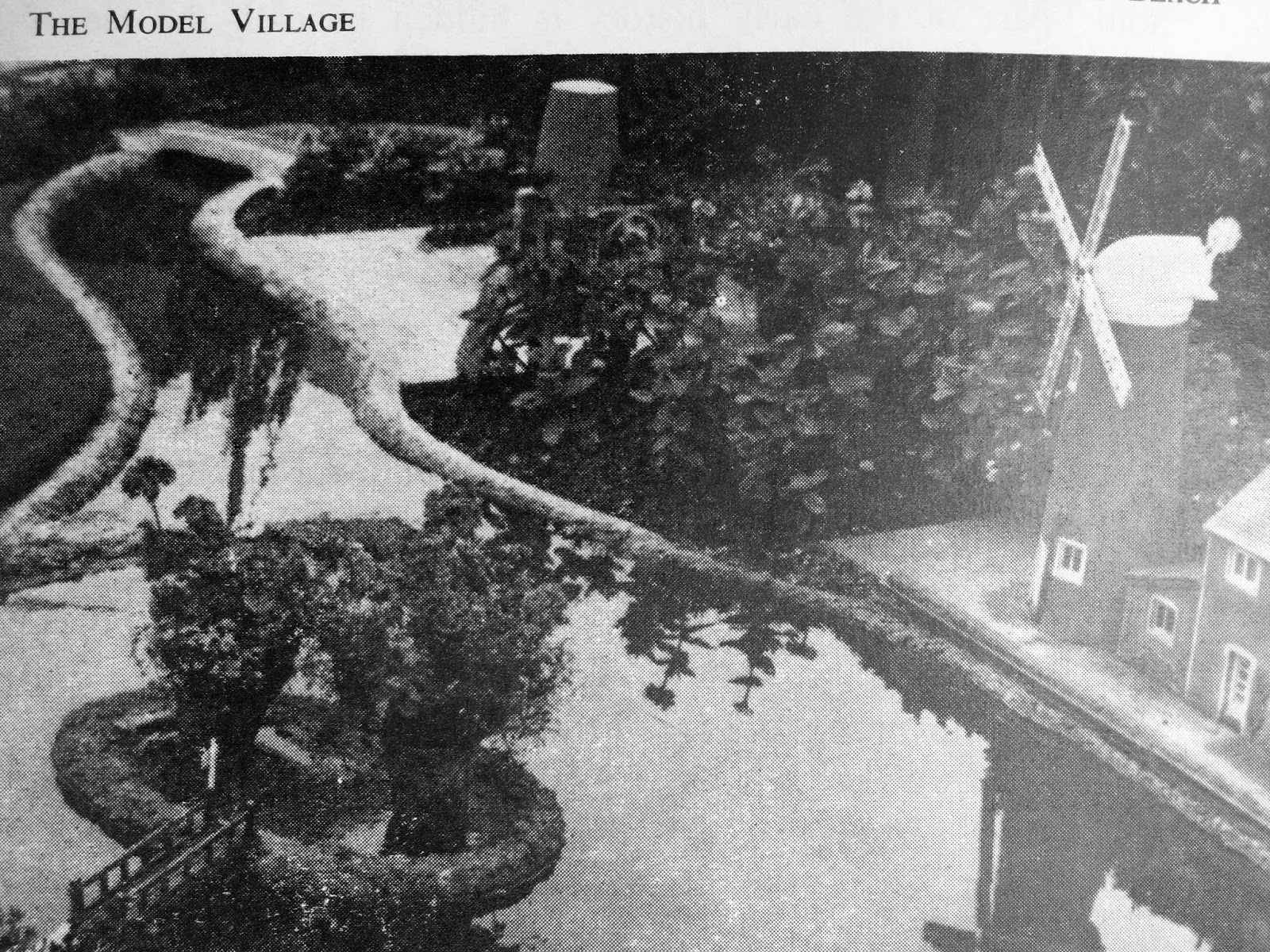
As well as the lovely beaches, there was a model village situated in North Lodge Park in 1965 where visitors could walk 'like Gulliver in Lilliput, among scale models of some of the famous buildings of Norfolk' (page 16).

The nearest model village to Cromer is now Merrivale, just down the coast in Great Yarmouth.


Cromer still has a zoo, but the Amazona is situated further out of town than the one in the 1965 guide. This says that the zoo was a recent addition to the town's attractions in the mid '60s.

'... Owned by a former lion-tamer of Bertram Mills's Circus, Alex Kerr. Mrs. Kerr is a daughter of Coco, and that famous and well-beloved clown is often to be seen nowadays about the streets of Cromer – a benevolent and elderly gentleman, not always recognised without his false nose, red wig and enormous boots' (page 12).

The site of the original Cromer Zoo can be seen to the left of this map


For one shilling and sixpence, the holidaymaker could have visited Birdland.


Golf, tennis, bowls, walking, riding and angling, were the pursuits advertised for the more sporting visitor. The tennis courts on Norwich Road were the ‘finest’ in East Anglia (advertisement, page 106). Other places of interest were the boating lake (still there in 2016), and the Regal Cinema (now known as Movieplex).


Olympia was 'the teenagers' rendezvous' where wrestling, skating, bingo, and jiving provided 'entertainment at its best'. Budgens supermarket and its adjoining car park now stand in its place. Where do the teenagers go jiving now I wonder?....


Budgen's car park in the centre of the photo was the site of the
Olympia Rollerdrome

In the next installment, I will let you know all about the hotels, guest houses and other places where you could have stayed just over 50 years ago.


 ************

All quotes and selected images from Cromer and District Official Guide, 1965, published by the Cromer Advertising Association, Urban District Council.


Wednesday, 20 July 2016

Cromer Official Guide, 1965 (Part 1)


You can learn a lot about a seaside resort's history from old holiday guides. You can also learn a lot about the tourist trade of the time.

This Cromer and District Official Guide from 1965 has a potted history of the town including information on lifeboat Coxwain Henry Blogg. However, the advertisements for guesthouses and attractions reveal small details about how much the resort has altered since the mid 1960s, and also how little it has changed. In this blog post I tell you how to get there.

 
Cromer's East Beach, long before the Rocket House Cafe
and Henry Blogg Museum were built


Getting There

The guide quotes from a local hotel proprietor who points out how the trade in 1965 changed across the year - from the elderly visitors who holidayed off-season, to married couples with young children in May, families with school-aged children in July, and young couples with prams until September. After the latter had left, the elderly returned once again. I imagine it is much the same today, with the peak tourist season being during the school holidays.

The guide also informs us that motor cars and holidays with pay had brought Cromer's delights 'within range of a far larger number of people than could reach them sixty years [previously]' (page 17).

A list of approximate distances between Cromer and cities around the United Kingdom shows that the publishers were hoping to attract motorists from as far away as Bristol (226 miles) and as near as Norwich (25 miles). It boasts that although ‘the quaint old streets in the centre are very narrow, the town has parks for 5,000 cars’ (page 16).

In an age when a large proportion of people relied on public transport rather than owned a car, the advertisements for coach services give a good idea about the hometowns of Cromer's customers.


Premier Travel supplied express coaches from Bedford, St. Neots and Huntingon Chatteris. Sheffield United Tours brought holidaymakers from Worksop, Sheffield and Rotherham. Trent Motor Traction Company carried people from Nottingham, Grantham, Derby, Loughborough and Mansfield.

The guide also gives an insight into rail links to this North Norfolk resort, with 'good train services of British Railways [connecting] Cromer with the rest of the country' including express trains to London and also services from Nottingham, Sheffield, Manchester, Leeds, Bradford, Leicester and Birmingham. The list gives a good record of some of the main towns where Cromer's holidaymakers came from (page 35).

Incidentally the same page informs the holidaymaker about the location of Cromer’s water supply – a deep well at the nearby village of Metton. How many holiday guides include this type of information in 2016?!


In further posts I will reveal more about Cromer’s attractions and tell you where you could have stayed in 1965.

Rocket House Gardens, Brunswick Terrace and the Gangway behind. This view has changed very little, although the houses to the left have been stripped of their ivy.


All quotes and selected images from Cromer and District Official Guide, 1965, published by the Cromer Advertising Association, Urban District Council.